If you're planning an event, you want to collect the photos your guests take. For the past decade, the default advice has been: "Create a clever hashtag and put it on a sign."
But is that actually effective?
We looked at data from early users of Forevio, many of whom used hashtags alongside our QR code system. We wanted to see definitively which method pulled in more photos.
The results were eye-opening.
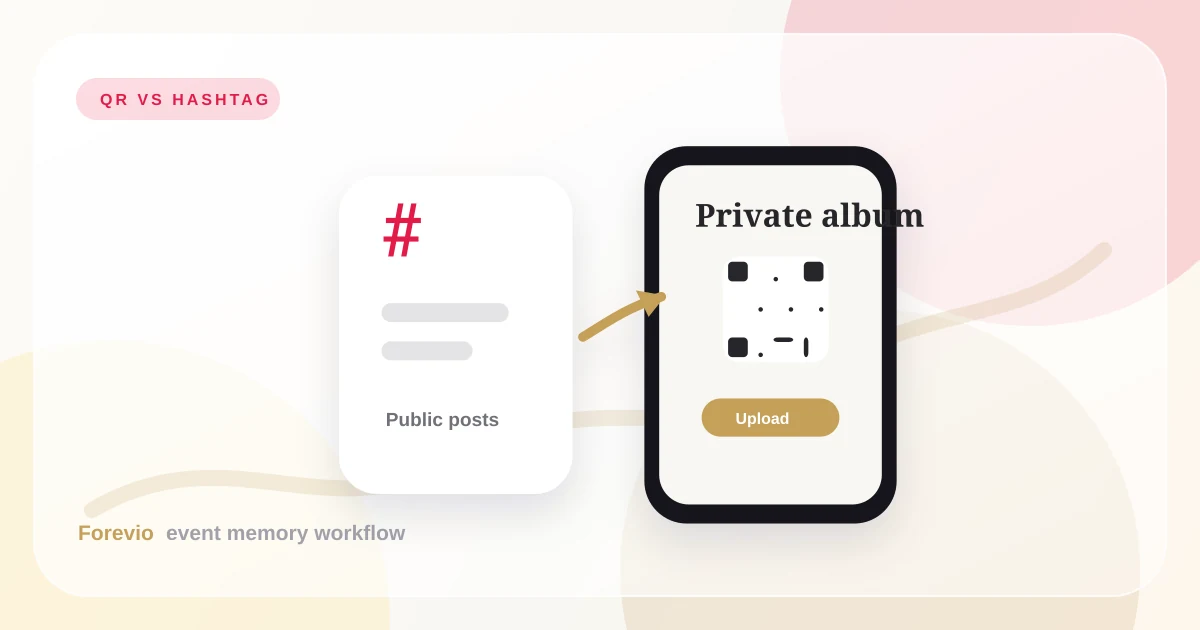
QR vs. hashtag
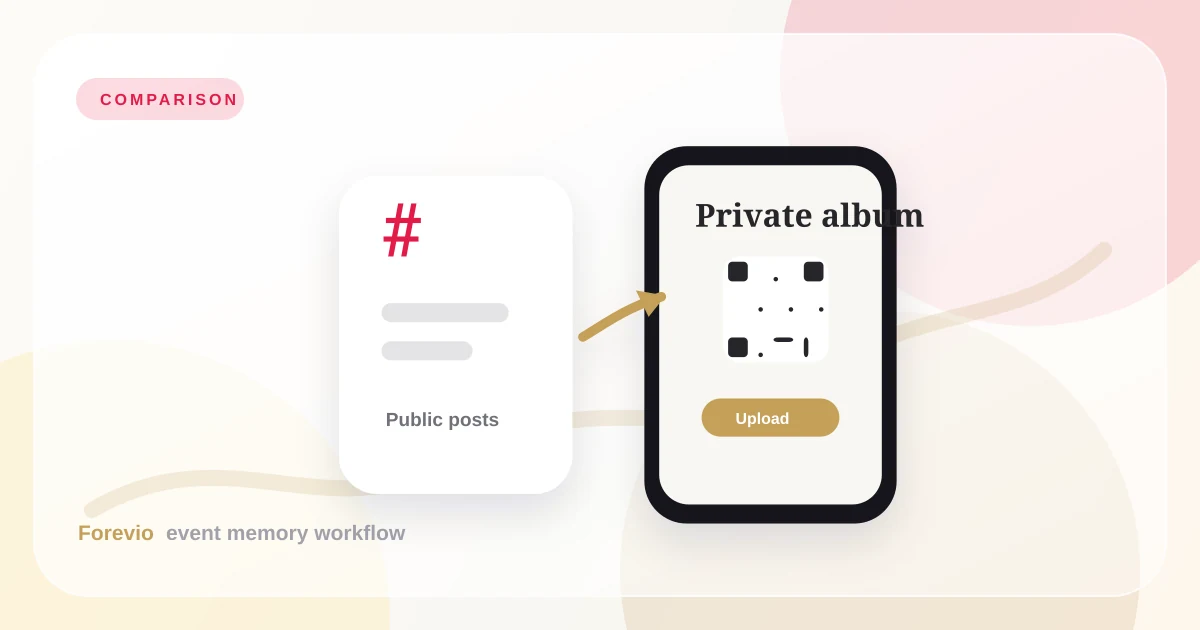
A hashtag asks guests to publish. A QR code lets them contribute.
The Hashtag Fallacy
In theory, hashtags are great. They're catchy, they promote your event on social media, and they seem low-effort.
In practice, they often fail for three reasons:
- The Privacy Wall: Over 50% of Instagram users have private accounts. If a guest tags a photo with your hashtag but their account is private, you will never see that photo unless you follow them (and even then, finding it is a hassle).
- The Procrastination Factor: People often take photos during the event but wait until the next day to post them. By then, they might forget the hashtag entirely.
- The "Main Feed" Pressure: Guests only post their absolute best photos to their Instagram grid. The funny outtakes, the blurry dance-floor shots, the candid moments—those stay in their camera roll, lost to you forever.
Why QR Codes Win
When couples used Forevio's QR code system—placing small cards on tables or projecting the code onto a screen—the photo yield increased by an average of 400% compared to hashtags.
Why?
Frictionless Uploading Guests point their camera at the code. Their phone opens a webpage. They tap 'upload'. That's it. There's no app to download, no account to create, and no social media platform acting as a middleman.
Zero Social Pressure Because the gallery is private to the event, guests don't feel the need to apply filters or curate wildly. They just dump their photos into the collective pool. You get everything, not just the heavily-edited highlights.
Instant Gratification With features like live slideshows, guests can upload a photo and see it on the venue screens seconds later. This creates a loop: guests see photos appearing, realize how easy it is, and are motivated to upload their own.
How to Make the QR Code Work Harder
The QR code is only as strong as the moment around it.
- Put it where guests pause, not where they rush.
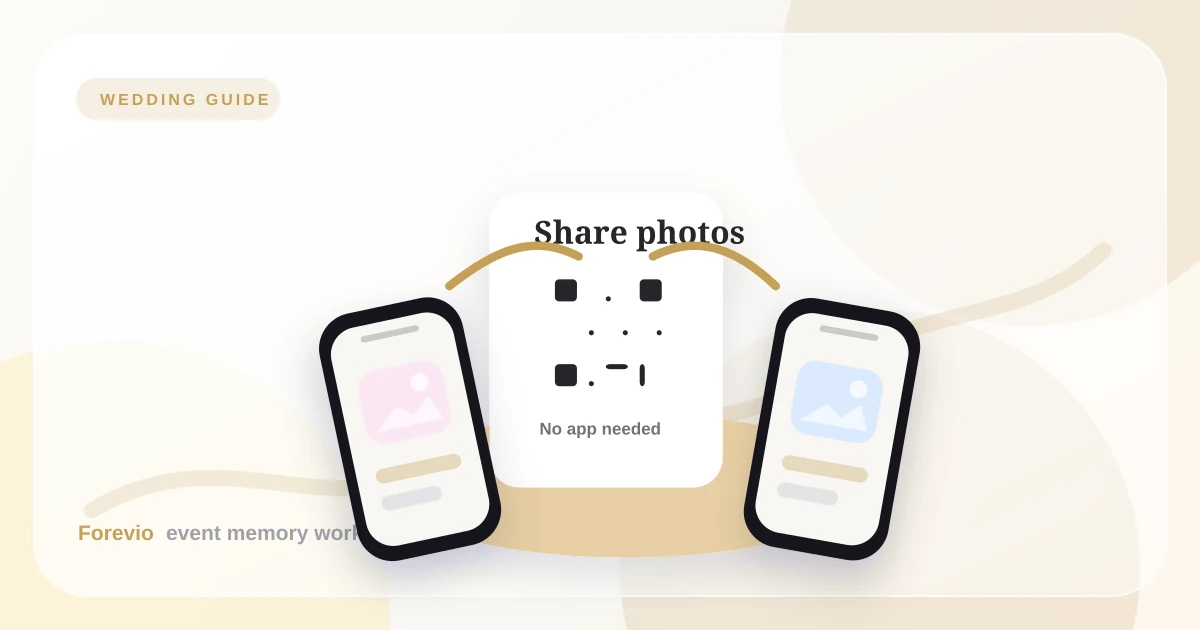
- Add "No app needed" directly under the code.
- Mention the gallery once during the reception.
- Use moderation before live display.
- Send the same link the next morning for late uploads.
Small details like these turn the QR code from a passive sign into a real participation prompt.
How to use both without confusing guests
You can still keep the hashtag if it is part of the event personality. Just give each channel a clear job:
- The hashtag is for public social posts.
- The QR code is for the couple's private photo collection.
- The gallery link is the place to send original-quality photos and videos.
On signs, make the QR code visually dominant and place the hashtag below it as a secondary detail. If the two appear equal, guests may choose the social path and skip the private upload.
The Verdict
Are hashtags dead? Maybe not completely. They're still fun to put on custom napkins.
But if your goal is to genuinely collect the maximum number of memories from your event, in high resolution, without leaving people out? The QR code is the undisputable champion.
Next reads: Wedding QR code photo upload guide, Forevio vs. wedding hashtags, and How to collect wedding guest photos.
Quick answers
Frequently asked questions
Are wedding hashtags still useful?
Wedding hashtags can still be fun for social posts, but they are not reliable for collecting private, high-quality guest photos from every guest.
Why do QR codes get more guest photos than hashtags?
QR codes send guests directly to the upload flow. Hashtags ask guests to publish publicly, remember the tag, and choose photos they are comfortable posting on social media.
Can we use both QR codes and hashtags?
Yes. Use the hashtag for fun public posts, but use the QR upload gallery as the main collection system if your goal is to gather more usable photos.